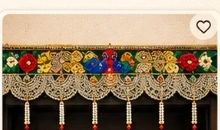
7 Auspicious Indian Door Toran Ideas to Welcome Prosperity into Your Home
Explore the sacred heritage, Vastu significance, and timeless beauty of traditional Indian door torans. Learn how handmade peacock and velvet torans elevate your entrance.
Somnath Parekh & Family
Master Craftsman & Heritage Artisan
The Sacred Tradition of Indian Door Torans
In Indian architectural and cultural tradition, the main entrance—the *Mukhya Dwar*—is not merely a doorway. It is the energetic threshold where positive vibrations, divine blessings, and welcoming energies enter your living space. For centuries, Indian households have adorned the doorway with handcrafted torans (bandanwars) during festivals, weddings, and auspicious beginnings.
Historically crafted from fresh mango leaves and marigold blossoms to purify the air, the art evolved into permanent heritage textiles: rich velvets, hand-twisted golden zari threads, vibrant resham silk embroidery, and auspicious motifs like peacocks, lotus blossoms, and Shubh-Labh insignia.
1. Royal Velvet Embroidered Torans for Stately Entrances
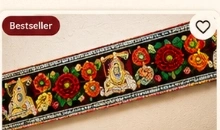
A velvet door toran brings regal warmth to dark wood, brass-accented, or teak entrance doors. The plush matte texture of crimson, deep maroon, or royal emerald velvet absorbs harsh reflection and provides an opulent backdrop for golden zari work.
Our signature **Royal Peacock Door Toran** is crafted in our family studio using layered resham threads to render the peacock's plumage in shimmering jewel tones. The peacock (*Mayur*) is deeply revered in Indian tradition as a symbol of grace, spiritual guardianship, and protection against negative omens.
2. Auspicious Shubh-Labh and Kalash Hangings
According to ancient Vastu Shastra principles, placing sacred symbols like *Shubh* (auspicious goodness) and *Labh* (righteous prosperity) at eye level on either side of the doorway focuses the visitor's consciousness on well-being and gratitude. Pairing an embroidered door frieze with vertical side hangings creates a complete doorway frame that welcomes guests with sacred warmth.
3. Scalloped Pearl and Mirror Work Torans for Festive Light
Traditional Kutchi and Gujarati craft heritage incorporates mirrors (*abhla*) and cascading faux pearl drops along the scalloped hem of the toran. As natural morning light or festive evening diyas flicker near your entrance, the mirrors reflect delicate points of light, bringing your doorway to life without feeling cluttered.
4. Vastu Guidelines for Main Entrance Torans
To maximize the harmony and aesthetic grace of your door toran:
- **Height & Fit:** Ensure the toran spans the entire doorframe width (typically 36 to 42 inches in standard Indian homes) without sagging excessively in the middle.
- **Directional Resonance:**
- - *North & North-East entrances:* Flourish with green, floral, and gold accents.
- - *East entrances:* Benefit from warm maroon, saffron, and sun-inspired embroideries.
- - *West & South entrances:* Enhance with heavy velvet bases and rich jewel tones.
- **Maintenance:** Unlike disposable plastic decorations, authentic fabric torans retain their radiance for years when gently dry-brushed or stored flat in a breathable cotton bag between festival seasons.
The ART IS MEE Commitment to Pure Craftsmanship
At **ART IS MEE**, every toran is stitched with patience and pride by our mother in Surat, Gujarat. We source premium fabrics and sturdy brass hanging loops so that the art you bring into your sanctuary is an heirloom, not a mass-manufactured throwaway.
Somnath Parekh & Family
Master Craftsman & Heritage Artisan
Based in Surat, Gujarat, the Parekh family has dedicated generations to preserving authentic Indian sacred art, velvet door torans, and traditional craftsmanship under the brand ART IS MEE. Every creation tells a story.
Featured in This Article
Royal Peacock Door Toran
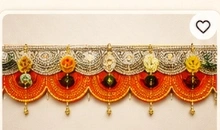
Traditional Festive Toran